Halloween Rubber Duck Clipart: A Quirky Design Asset Worth Exploring
There is something unexpectedly delightful about a rubber duck dressed for Halloween. It is playful without being childish, spooky without being frightening, and instantly recognisable without feeling overused. Halloween rubber duck clipart has carved out a small but loyal following among designers, small business owners, and content creators who need a visual that balances humour, seasonal flair, and broad audience appeal. Whether you are working on social media graphics for a local pumpkin patch, designing a Halloween-themed planner, or building brand assets for a quirky subscription box, this type of clipart offers a surprising amount of versatility.
At first glance, the concept sounds almost absurd—a rubber duck in a witch hat or a tiny ghost costume. But that absurdity is precisely what gives it power. It disarms the viewer. It invites a second look. And in a digital landscape saturated with generic skulls, cobwebs, and orange-and-black colour schemes, a rubber duck with a miniature broomstick stands out precisely because it refuses to take itself too seriously.
What Halloween Rubber Duck Clipart Looks Like and Why It Works
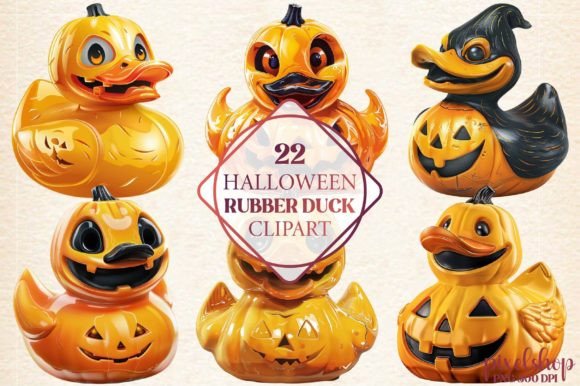
Halloween rubber duck clipart typically features a classic yellow duck silhouette or a more detailed illustration, accessorised with Halloween motifs. Common variations include ducks wearing witch hats, vampire capes, Frankenstein bolts, or tiny ghost sheets with eye holes. Some designs keep the duck yellow and simply add a costume, while others reimagine the duck itself in purple, green, or orange to match the holiday palette. The style ranges from clean vector flat illustrations to hand-drawn, slightly rough textures that feel more like a sketchbook find.
What makes this clipart appealing is its inherent contradiction. Rubber ducks are associated with bath time, childhood, and innocence. Halloween is associated with the macabre, the mischievous, and the slightly unsettling. Mixing the two creates a visual tension that feels clever rather than jarring. It is the same principle that makes a kitten dressed as a lion or a puppy in a pirate hat so shareable—the unexpected pairing triggers an emotional response that pure horror or pure cuteness cannot achieve on its own.
From a design perspective, Halloween rubber duck clipart works well because it offers a clear focal point with built-in personality. The duck shape is simple and recognisable, which means it scales down beautifully for icons or badges and scales up without losing clarity. The Halloween accessories add detail and theme without overwhelming the composition. This makes it a strong candidate for projects where you need a quick visual anchor—think email headers, sticker sheets, product labels, or even animated GIFs for social media stories.
Where Halloween Rubber Duck Clipart Fits Across Creative and Commercial Projects
One of the most common questions I hear from fellow designers and small business owners is whether a niche design asset like Halloween rubber duck clipart can justify its place in a professional toolkit. The honest answer is that it depends entirely on the project and the audience. But in my experience, the projects where it works best share a few common traits: they lean into humour, they serve a family-friendly or all-ages demographic, or they operate in a space where standing out visually matters more than conforming to seasonal clichés.
Branding and Logo Design
If you are building a brand identity for a Halloween-themed event, a children's boutique, a pet supply company, or a festive food truck, Halloween rubber duck clipart can serve as a memorable mascot or secondary mark. It signals approachability and a sense of fun without sacrificing professionalism. A rubber duck wearing a witch hat as part of a logo feels intentional and playful, not random. The key is to treat the clipart as a design element with purpose, not as a decorative afterthought. Pair it with a clean sans serif font or a rounded serif font to keep the overall mark balanced and legible.
Social Media Graphics and Digital Content
Social media thrives on content that stops the scroll. Halloween rubber duck clipart does exactly that. It works especially well for Instagram stories, Facebook posts, Pinterest pins, and TikTok thumbnails where the visual needs to communicate the theme within a split second. A single duck in a ghost costume with a short headline like "Spooky season starts here" or "Quack or treat" creates instant engagement. Because the clipart is inherently conversational, it also pairs well with handwritten or script typefaces for captions and callouts. Just be mindful of readability—if you use a display font, keep it to short phrases and use a simpler sans serif font for longer text.
Print and Packaging Design
For physical products, Halloween rubber duck clipart shines in categories like greeting cards, gift tags, stickers, washi tape, and limited-edition packaging. A set of Halloween duck stickers can be a low-cost add-on for an online shop, increasing perceived value and encouraging social sharing. On packaging, the clipart can serve as a cheerful alternative to standard Halloween imagery, which tends toward the gory or the gothic. Brands that target families, children, or pet owners will find that a rubber duck in a vampire cape communicates a Halloween theme without alienating sensitive audiences.
Editorial and Publishing Work
Newsletters, blog posts, ebooks, and printable planners all benefit from visual breaks that reinforce the seasonal theme. Halloween rubber duck clipart works well as a section divider, a bullet point icon, or a marginal illustration. Because the duck shape is compact and the details are minimal, it does not compete with body text or disrupt the reading flow. In editorial design, the clipart can be used sparingly to add personality without overwhelming the layout. A well-placed rubber duck in a corner of a page can make a standard informational piece feel more approachable and memorable.
Personal Projects and Hobbyist Crafting
Many crafters, hobbyists, and DIY content creators use Halloween rubber duck clipart for party invitations, cupcake toppers, scrapbook pages, and classroom decorations. The clipart is easy to print, cut, and resize, making it a practical choice for hands-on projects. If you sell digital products on platforms like Etsy or Creative Market, Halloween rubber duck clipart can be bundled with other seasonal assets to create themed design kits that appeal to teachers, parents, and event planners.
How Halloween Rubber Duck Clipart Influences Brand Perception and Audience Engagement
Every design asset carries a set of associations. A rubber duck universally suggests play, comfort, and nostalgia. Adding Halloween elements layers in excitement, mischief, and seasonal relevance. When these two sets of associations combine, the result is a visual that feels both familiar and fresh. For brands, this can translate into higher engagement rates because the imagery triggers an emotional response—often a smile or a sense of curiosity—before the viewer even reads the accompanying text.
In terms of readability and visual hierarchy, Halloween rubber duck clipart is relatively low-risk. It does not demand attention the way a high-contrast, aggressive graphic might. Instead, it invites attention. This makes it suitable for projects where you want the audience to feel welcomed rather than shouted at. For email marketing campaigns, for example, a rubber duck icon in the subject line or header can improve open rates by hinting at a lighthearted tone. For landing pages, the clipart can act as a visual cue that the offer is fun, low-pressure, and family-friendly.
Consistency matters in brand identity, and Halloween rubber duck clipart can be part of a cohesive seasonal strategy. If your brand already uses a rubber duck as a mascot or recurring motif, the Halloween variations extend that identity into the holiday season without breaking visual continuity. If you are starting from scratch, the clipart can become a signature element that appears year after year, building recognition and audience loyalty over time.
Practical Guidance for Choosing and Using Halloween Rubber Duck Clipart
Selecting the right Halloween rubber duck clipart for your project involves more than picking the cutest option. Consider the following factors to ensure the asset supports your goals rather than distracting from them.
Evaluate Project Fit and Audience Expectations
Ask yourself whether the clipart aligns with your brand voice and your audience's expectations. A rubber duck in a ghost costume works well for a children's book illustrator or a family-friendly blog. It may feel out of place for a horror film studio or a gothic fashion brand. The clipart's strength is its approachability, so lean into that. If your project requires a more sophisticated or eerie tone, consider using the duck as a subtle accent rather than the primary visual.
Test Font Pairings for Cohesion
Halloween rubber duck clipart pairs naturally with display fonts, handwritten typefaces, and rounded sans serif fonts. Avoid pairing it with overly formal or heavy serif fonts, as the contrast in personality can feel jarring. A good rule of thumb is to match the clipart's energy—if the duck is playful and simple, keep the typography playful and simple too. For longer body text, switch to a clean sans serif font like Nunito, Poppins, or Montserrat to maintain readability while preserving the friendly tone.
Review Included Styles and Formats
When purchasing or downloading Halloween rubber duck clipart, check whether the set includes multiple poses, costumes, and file formats. Vector formats like SVG or AI give you the flexibility to resize, recolor, and edit individual elements without losing quality. Raster formats like PNG with transparent backgrounds are convenient for quick use in social media graphics or print projects. If the set offers variations, you can mix and match ducks to create compositions that feel dynamic and customised rather than repetitive.
Consider Readability and Scale
Halloween rubber duck clipart is most effective at small to medium sizes where the duck shape and costume details remain legible. If you scale it down too far, the accessories may become indistinguishable blobs. If you scale it up too large, the simplicity of the design may feel underwhelming. Test the clipart at different sizes within your layout to find the sweet spot where the duck reads clearly without dominating the composition.
Understand Commercial Licensing
Commercial use of Halloween rubber duck clipart varies widely depending on the source. Some sets come with a standard commercial license that allows use in products, marketing materials, and digital assets. Others may restrict use to personal projects only or require an extended license for merchandise. Always read the license terms before downloading or purchasing, especially if you plan to use the clipart in items for sale, client projects, or large-scale distribution. Keeping a record of the license for each asset you use is a simple habit that protects you and your business.
Final Thoughts on Using Halloween Rubber Duck Clipart
Halloween rubber duck clipart may seem like a niche choice, but its charm lies in its ability to surprise and connect. It works because it is unexpected, because it blends two familiar ideas into something new, and because it invites a smile before it delivers a message. For designers, marketers, and small business owners looking to stand out during the Halloween season, this clipart offers a refreshing alternative to the same tired imagery. Treat it as a deliberate design decision, pair it with thoughtful typography and layout, and let its playful personality do the heavy lifting.