Cow and Pig Eating Watermelon Clipart: A Playful Design Asset
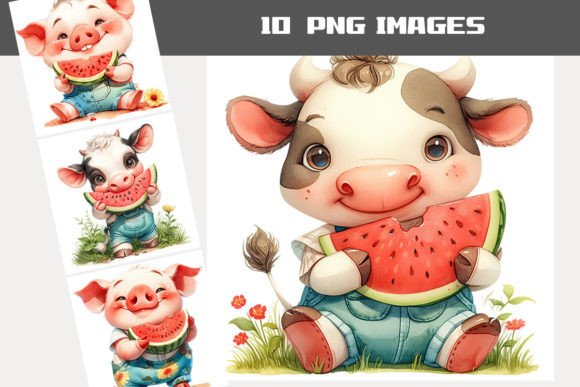
You know that feeling when a project needs something light, something that makes people smile without trying too hard? That is exactly the space Cow and Pig Eating Watermelon Clipart occupies. This isn't a hyper-realistic farm scene or a generic stock illustration. It is a deliberately charming, often hand-drawn or vector-style graphic featuring a cow and a pig happily devouring a watermelon. The visual hook is pure delight: two animals, one fruit, and a lot of personality. The cow might be caught mid-chew, juice dripping, while the pig is elbows-deep in the rind. The style leans toward the whimsical—rounded lines, soft or vibrant colors, expressive eyes, and a composition that feels candid rather than posed. This clipart works because it taps into a universal, low-stakes joy. It is not trying to sell you something complicated; it is just showing you a moment worth smiling at.
The charm of this particular piece comes from its emotional contrast. Cows and pigs are not typically associated with watermelon in real life, but the pairing feels right because both animals have this grounded, unpretentious quality. The clipart translates that into a visual that reads as honest, funny, and warm. The watermelon acts as a natural focal point—its bright green rind, pink flesh, and black seeds create a pop of color that draws the eye. Whether the clipart is rendered as a flat vector, a watercolor wash, or a textured hand-drawn sketch, the core appeal remains: it is a moment of shared enjoyment between two unlikely friends. This makes it an incredibly versatile asset for projects that need to communicate camaraderie, summer fun, rural charm, or just a break from visual seriousness.
Where This Clipart Works Best Across Creative and Commercial Projects
The real strength of Cow and Pig Eating Watermelon Clipart is how naturally it fits into multiple contexts without feeling forced. In branding, it is a strong choice for farm-to-table restaurants, organic produce companies, farmers markets, or any business that wants to project approachability and rustic authenticity. A small craft food brand selling jam, pickles, or honey could use this clipart on labels, tags, or website banners to signal that the brand does not take itself too seriously but cares deeply about quality and provenance. For logo design, a simplified version of this clipart—perhaps just the cow and pig silhouettes with a watermelon slice between them—makes for a memorable, friendly mark that stands out on packaging or signage.
In editorial design, this clipart works beautifully in children's books, magazines focused on sustainable living, or seasonal publications that cover summer recipes, county fairs, or agriculture. A food blog or lifestyle magazine could use it as a header image for a watermelon salad recipe or a feature on farm visits. The clipart brings a lighthearted energy that balances text-heavy pages without distracting from the content. For social media graphics, particularly Instagram posts or Pinterest pins that promote summer activities, grilling tips, or backyard parties, this image is gold. It stops the scroll because it feels authentic—not like a polished ad, but like something a friend might share.
On the print side, think greeting cards, stickers, posters, and even fabric designs. A card that says "Thinking of you" with a cow and pig sharing a watermelon feels infinitely more memorable than a generic floral print. For packaging design, especially for snack foods, pet treats, or children's products, this clipart adds a layer of warmth that can differentiate a product on a crowded shelf. The personality of the animals communicates that the brand cares about joy, not just sales. Even in web design, used as a hero image on a landing page for a farm stay, a summer event, or a food delivery service, it creates an instant emotional hook. The clipart humanizes the brand, making it feel like a place you want to spend time, not just buy from.
How Clipart Influences Readability, Visual Hierarchy, and Brand Perception
It might seem unusual to talk about readability and visual hierarchy in the context of clipart, but the placement and scale of Cow and Pig Eating Watermelon Clipart directly affect how a viewer processes a page. If the clipart is large and centered, it becomes the primary focal point. That means your headline and call-to-action need to sit comfortably around it, not fight against it. The clipart's rounded shapes and bright colors naturally draw attention first, so you can use it as an anchor to guide the eye from the image to the text and then to the button or offer. When scaled smaller and placed in a corner or as a sidebar accent, it adds visual interest without dominating the layout. This flexibility gives designers control over pacing—whether you want the viewer to pause on the image or move quickly to the content.
From a brand perception standpoint, using clipart like this signals confidence and personality. A brand that uses a playful, hand-drawn cow-and-pig scene is telling the audience, "We are approachable, we have a sense of humor, and we value genuine connection over polished perfection." This is especially powerful for small businesses and local brands that compete with larger, more corporate competitors. The clipart acts as a visual signature of authenticity. Consistency matters here: if you use this clipart across your website, email newsletters, packaging, and social media, it creates a cohesive brand language. Customers start to associate that specific image with your brand's personality, which builds recognition over time. Every time they see a cow and pig sharing a watermelon, they think of your farm stand or your juice brand. That kind of visual shorthand is hard to achieve with generic stock photography.
The clipart also influences audience engagement because it lowers the emotional barrier. People are more likely to stop, read a caption, click a link, or share a post when the imagery feels warm and relatable. In a digital landscape full of high-gloss ads and AI-generated perfection, something simple and hand-hewn stands out. The cow and pig clipart invites the viewer into a story, even if that story is just "summer is here and we are happy." This emotional response increases time on page, click-through rates, and shareability—all metrics that matter for publishers, bloggers, and content creators. The clipart is not just decoration; it is a functional tool for holding attention and creating connection.
Practical Guidance on Choosing and Using This Clipart Effectively
Not every version of Cow and Pig Eating Watermelon Clipart is right for every project. The first thing to evaluate is the visual style of the clipart itself. Some versions are highly detailed with shading and texture, perfect for print materials where quality and depth matter. Others are flat, minimalist vectors that work well on screens and at small sizes. If you are designing a logo, you want a simplified version that reads clearly at 50 pixels wide. For a poster or packaging, you have more room for detail. Consider the color palette too: some clipart uses muted, earthy tones that feel nostalgic and rustic, while others use bright, saturated colors that pop on digital platforms. Match the clipart's mood to your project's tone.
Project fit goes beyond style. Think about your audience. If you are marketing to parents with young children, the playful nature of this clipart is a direct hit. If your audience is more corporate or luxury-focused, it may feel out of place unless you are intentionally using humor to disrupt expectations. Test the clipart in mockups before committing. Place it next to your headline, your logo, and your call-to-action. Does it support the message or overwhelm it? Does it make the layout feel crowded or balanced? A quick test on a few layouts will tell you more than any guesswork. Readability considerations are also key: if the clipart is busy or uses similar colors to your background, it can create visual noise. Keep the background simple, use contrast effectively, and ensure that any text placed over or near the clipart remains legible.
When it comes to font pairings and typography alongside this clipart, lean into its personality. A rounded sans serif font or a friendly handwritten font will complement the casual, warm feel of the animals. Avoid overly formal serif fonts or rigid display fonts that clash with the clipart's organic energy. If you are using the clipart on a product label, a script font for the product name paired with a clean sans serif for the ingredients list creates a nice hierarchy. The clipart should feel like part of a cohesive brand identity, not an afterthought. Consider using a consistent color palette across the clipart and your typography to tie everything together. For instance, pull the watermelon pink or the grass green from the clipart into your headline color or button design.
Finally, review the commercial licensing for any premium font or commercial font you pair with the clipart, as well as the clipart itself. Many clipart sets come with allowances for personal use, small business use, or unlimited commercial use. Read the fine print carefully. If you are a small business owner, entrepreneur, or content creator, you want the flexibility to use the asset across products, marketing, and digital media without worrying about legal restrictions. Some marketplaces require attribution, while others do not. Know your usage rights before you invest time in layout and production. The last thing you want is to redesign your packaging because you overlooked a license limitation.
In practice, I have seen this clipart used brilliantly on a small batch hot sauce label—the cow and pig were grinning behind a pile of watermelon slices, and the product name was "Summer Heat." The label sold out at farmers markets because people picked it up just to smile at it. Another example: a wedding invitation for a couple who met at a county fair used a watercolor version of the clipart as a subtle nod to their story. The invitations were shared widely on social media because they felt personal and unexpected. These are not accidents. They are the result of a designer understanding the emotional weight of a simple image and placing it where it can do the most good.
When you are evaluating design assets like this clipart, ask yourself what feeling it brings to the room. Does it make you want to be part of the scene? Does it remind you of summer afternoons or lazy weekends? If yes, you are on the right track. The best modern typography and visual elements work because they connect with something real. Cow and Pig Eating Watermelon Clipart connects with joy, simplicity, and shared experience. That is a powerful foundation for any creative project, whether you are building a brand, designing a publication, or just making something that makes people happy.