Designing with Valentine Hugging Bear Clipart
If you have ever searched for imagery that balances emotional warmth with practical versatility, you have likely landed on Valentine Hugging Bear Clipart. This particular design asset occupies a distinct niche in the world of creative resources. It is not a generic teddy bear illustration, nor is it an overly sentimental rendering. Instead, it offers a specific expression of affection that works across a surprising range of projects. Understanding what makes this clipart valuable, where it performs best, and how to integrate it into your workflow can save you time and elevate your creative output.
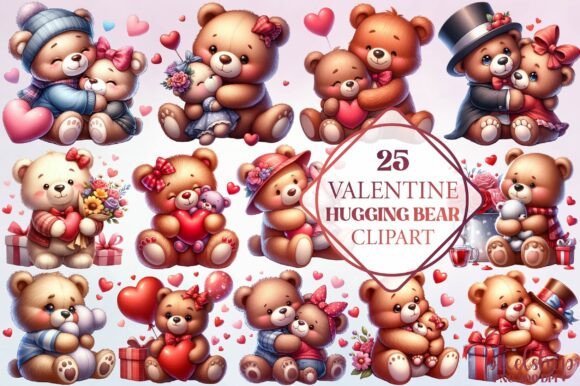
The visual personality of Valentine Hugging Bear Clipart is defined by its embrace. The bear is typically depicted with both arms extended, often holding a heart, a small gift, or another bear. The linework tends to be clean without being rigid, allowing for a soft, approachable feel. Many versions use moderate detail in the fur texture and facial features, which makes the bear readable at various sizes. The color palette usually revolves around reds, pinks, whites, and soft browns, but the best variants avoid overly saturated tones. This restraint means the clipart does not fight for attention within a layout. Instead, it invites the viewer in. That invitation is the core of its appeal.
The style of this clipart often walks a line between classic illustration and modern vector art. It is not trying to be a handwritten font or a script font in visual form, but it carries a similar handmade warmth. This is important because it allows the clipart to pair well with many typeface categories. Whether you are using a serif font for an elegant greeting card or a sans serif font for a clean social media graphic, the hugging bear adapts. It functions as a visual anchor that brings human emotion into otherwise formal layouts.
Where Valentine Hugging Bear Clipart Delivers Real Results
One of the most common mistakes designers and content creators make is assuming thematic clipart only works for obvious projects. Valentine Hugging Bear Clipart proves otherwise. It is not confined to February 14th. Consider these practical applications where the clipart can strengthen communication and audience engagement:
- Brand identity for children’s products or services. A daycare, a pediatric clinic, or a children’s book publisher can use the bear as a recurring visual motif. It signals safety, care, and friendliness without relying on text.
- Packaging design for boutique gifts. Small businesses selling candles, chocolates, or handmade soap can place the clipart on labels or hang tags. It elevates the perceived value by adding a personal, thoughtful touch.
- Social media graphics for engagement posts. A simple quote overlay on a soft background with the hugging bear in the corner can outperform generic stock photos. The bear creates emotional resonance quickly.
- Editorial design for lifestyle blogs and magazines. Articles about relationships, self-care, or family traditions benefit from the bear’s universal appeal. It breaks up text blocks without distracting from the message.
- Web design elements such as icons or call-to-action reinforcement. Placing the bear next to a newsletter sign-up button or a support page link can reduce friction. It humanizes the digital experience.
The clipart also works in print projects like flyers, posters, and event invitations. Because many versions are offered as design assets with transparent backgrounds, you can layer them seamlessly into existing layouts. This flexibility reduces production time and allows for rapid iteration when testing different visual approaches.
Influencing Readability, Hierarchy, and Brand Perception
Even though Valentine Hugging Bear Clipart is not a typeface, it directly impacts how your audience reads and interprets your content. The placement and scale of the clipart can guide the eye through a page. If you place the bear at the top left of a flyer, the viewer’s gaze naturally starts there and moves toward your headline. If you tuck it beside a pull quote, it signals emphasis. This is a subtle form of visual hierarchy that many designers overlook when using decorative elements.
Brand perception also shifts depending on how you use the clipart. A consistent, restrained application suggests professionalism and attention to detail. Overusing it or placing it in mismatched contexts can dilute its emotional impact. Small business owners and marketers should treat Valentine Hugging Bear Clipart as a premium font would be treated: a deliberate choice, not a default filler. When used intentionally, it reinforces brand identity by becoming a recognizable symbol. Over time, your audience will associate the bear with the positive feelings you create around your brand.
Consistency matters here as well. If you are building a series of social media graphics, using the same bear variant across posts creates a cohesive look. This builds recognition faster than mixing different illustration styles. The bear becomes part of your visual language, which is exactly how strong modern typography systems work. The same principle applies to editorial design and packaging design. Repetition with purpose builds trust.
Practical Guidance for Choosing and Using the Clipart
Selecting the right Valentine Hugging Bear Clipart requires evaluating your project fit on several levels. First, consider the resolution and file format. For print work, you need vector files such as AI or EPS. These allow infinite scaling without loss of quality. For digital use, PNG with transparency is usually sufficient, but check that the resolution matches your output size. Nothing undermines professionalism faster than a pixelated bear on a high-resolution screen.
Next, review the included variations. Many designers prefer a creative font that offers multiple weights, but with clipart, you want multiple poses or expressions. A set that includes the hugging bear alone, the bear with a heart, and the bear in a profile view gives you flexibility. You can then pair these variations with different typefaces to create distinct moods. For example:
- Pair the hugging bear with a display font for a bold headline. The contrast between the soft illustration and the strong lettering creates visual interest.
- Use the bear with a handwritten font for a casual, personal note. This combination feels authentic and approachable.
- Combine the bear with a clean sans serif font for a modern, minimalist layout. The bear adds the warmth that the typeface intentionally omits.
Testing these font pairings before finalizing a design is essential. The goal is balance, not chaos. If the bear is detailed, keep the type simple. If the bear is minimal, you can use a more expressive typeface. This interplay between image and text is where good design becomes great design.
Readability considerations also extend to color. If your background is busy, the bear can become lost. Use a subtle drop shadow or a soft color block behind the clipart to ensure it remains visible. This is particularly important in web design where screen resolutions and lighting conditions vary. Accessibility matters here too. High contrast between the bear and its background ensures that all users, including those with visual impairments, can perceive the intended emotional cue.
Licensing and Practical Recommendations
Before using Valentine Hugging Bear Clipart in any commercial project, review the licensing terms. Not all clipart is created equal. Some licenses restrict usage to personal projects, while others allow commercial font-style usage for products, branding, or merchandise. If you are a small business owner or an entrepreneur, investing in a commercial font or clipart set with a clear, broad license is worth the cost. It saves legal headaches down the road and allows you to scale your usage as your business grows.
Publishers and content creators should also check whether the clipart can be embedded in digital products like ebooks or templates. Some licenses require attribution, while others do not. Know the rules before you publish. This is not about being overly cautious; it is about protecting your work and respecting the creator’s rights.
When I work with clients on logo design or packaging design, I always recommend starting with the emotional goal of the project. If the goal is to communicate warmth, trust, and affection, Valentine Hugging Bear Clipart is a strong candidate. But it should never be the only element doing that work. Pair it with thoughtful typography, intentional color choices, and a clear layout. The clipart is a tool, not a crutch. Used well, it becomes a memorable part of your brand identity. Used carelessly, it becomes visual noise.
One final practical observation: test the clipart at different sizes in your layout software. A bear that looks charming at full size may lose its expression when scaled down to a social media avatar. Conversely, a bear that works as a small accent might feel overwhelming when blown up for a poster background. This testing phase is where experienced designers save themselves revision time. You can always adjust scale, but knowing the clipart’s sweet spot beforehand makes the whole process smoother.
Valentine Hugging Bear Clipart is more than a seasonal design asset. It is a flexible, emotionally resonant tool that can strengthen projects across branding, marketing, publishing, and personal creative work. By approaching it with the same strategic consideration you would give to a premium font or a critical design asset, you unlock its full potential. The result is work that feels intentional, human, and effective. That is the kind of work that resonates with audiences and builds lasting engagement.